Get Found Locally: Directories, Maps, and the Mailbox
Local visibility for small businesses: NAP consistency, the directories that still matter, directions and click-to-call as conversion rails, and a 30-day checklist to get found nearby.
- Most local marketing waste happens after interest, not before it — the neighbor wants you and cannot complete the trip.
- NAP consistency (name, address, phone) is the cheapest local ranking and trust factor you control.
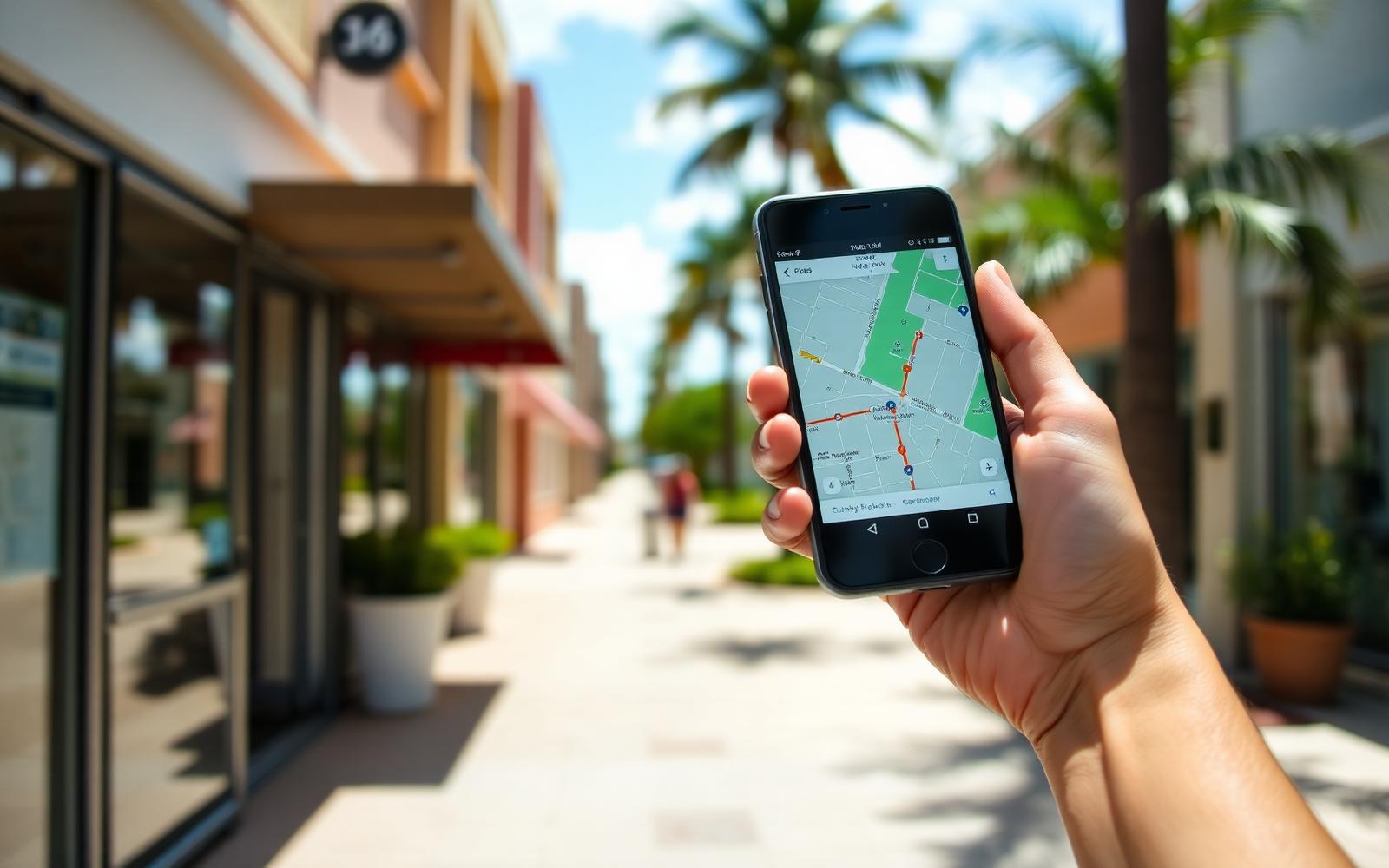
- Directions and click-to-call are conversion rails, not decoration; measure them.
- Print demand feeds search: a drop produces branded searches that only convert if your listings are clean.
- A 30-day checklist fixes almost all of it without an agency.
Who this is for: Owners who get some interest already — walk-ins, referrals, an ad campaign — and suspect they are losing people between interest and arrival.
Here is a failure nobody logs. A neighbor sees your ad, decides to come, searches your name, finds two listings with different phone numbers, one with the old hours, and a map pin behind a shopping plaza. They spend eleven seconds on the confusion and then go somewhere easier. You never learn it happened.
Local visibility is the set of signals — listings, map presence, hours, reviews, and contact rails — that let a nearby person find and reach you at the moment they decide to. It is not a growth channel. It is plumbing, and leaking plumbing makes every other channel look broken.
The gap between interest and arrival
Between “I want this” and “I am here” sit four small steps: find the name, confirm it is open, get directions, or call. Every one of them is a place to lose someone. Local businesses obsess over the first step and neglect the other three, which is why so much advertising underperforms for reasons that have nothing to do with the advertising.
NAP consistency, simply
NAP means Name, Address, Phone. The rule is that these three must be written identically everywhere they appear. Not roughly the same — identical. “Suite 4” and “Ste. 4” are different strings to a machine, and machines decide whether two listings are the same business.
- Pick one canonical spelling of your business name and never abbreviate it in one place and not another.
- Pick one address format, including suite notation.
- Use one primary phone number. Tracking numbers, if any, should be secondary and consistent.
- Make sure your own website footer matches too — it is the source people copy from.
Directories that still matter locally
You do not need a hundred listings. You need the handful people and machines actually read, kept accurate. Volume of citations matters far less than agreement between them.
| Type | Why it matters | What to keep current |
|---|---|---|
| Map profile | Primary source for directions and hours | Hours, categories, photos, phone, service area |
| Review platforms | Trust before the first visit | Respond to reviews; keep hours synced |
| Industry directories | Category-specific discovery | Services offered, license numbers |
| Local and chamber listings | Neighborhood credibility | NAP, one-line description |
| Your own site | The record everyone copies | Footer NAP, hours, embedded map |
Directions and click-to-call as conversion rails
A direction request is the single strongest intent signal a local business receives. Somebody is putting your address into a car. Treat that number the way an e-commerce store treats add-to-cart.
Click-to-call is its twin. Both should exist on every page a neighbor lands on, including the digital offer page behind a printed QR code — the setup described in Two QR Codes on One Print Ad. One tap, no form, no menu.
How print demand feeds search
A mail drop does not only produce immediate calls. It produces name recognition, and name recognition produces branded searches for weeks afterward — people who saw the page, did nothing, then remembered you when the need arrived. Those searches are the highest-converting traffic a local business gets.
But they only convert if what they find is coherent. This is the argument for sequencing: clean the listings, then create the demand. The reach side of that equation is covered in Direct Mail to 10,000 Homes, and the channel trade-offs in Direct Mail vs Social Ads vs Local SEO.
Reviews without gaming anything
Ask at the moment of satisfaction, in person, once. Make it easy with a short link or a code at the counter. Respond to every review, including the bad ones, in two calm sentences. Never buy reviews — in a neighborhood, the fake ones are obvious to the actual neighbors.
A 30-day local visibility checklist
- Week 1 — Audit: search your own business name and write down every listing you find, with its phone and hours.
- Week 1 — Choose the canonical name, address, and phone format.
- Week 2 — Correct the map profile: hours, categories, service area, ten real photos.
- Week 2 — Fix your website footer and contact page to match exactly.
- Week 3 — Update the remaining directories and remove duplicate listings.
- Week 3 — Add click-to-call and directions to every landing page and offer page.
- Week 4 — Ask ten happy customers for a review; respond to every existing one.
- Week 4 — Re-test the whole path from a phone, on cellular, from outside the building.
What to do Monday morning
Search your own name on a phone you have never used for work. Follow the first result all the way to your front door. Whatever slowed you down is costing you customers this week, and fixing it costs nothing. When the plumbing is clean, put your business in front of 10,000 homes.
Frequently asked questions
What is NAP consistency and why does it matter?
NAP is your business Name, Address, and Phone written identically everywhere online. Machines use string agreement to decide whether listings refer to the same business, and humans use it to decide whether you are trustworthy. Inconsistency splits your presence and loses customers mid-trip.
How do I get found on maps as a small business?
Claim and complete your map profile with accurate hours, correct categories, a precise pin, real photos, and a working phone number, then keep reviews flowing and respond to them. Accuracy and activity matter more than any trick.
How many directories should a local business be listed in?
A small number kept accurate beats a large number left stale. Prioritize your map profile, the main review platforms, one or two industry directories, and local chamber listings.
Does direct mail help local search?
Indirectly but meaningfully. A drop creates name recognition, which produces branded searches in the following weeks. Those searches convert well — but only if your listings, hours, and directions are correct when people arrive.
What should I measure for local visibility?
Direction requests, calls from listings and landing pages, and the count of new reviews. Direction requests are the strongest intent signal because someone is entering your address into a car.
Put your business inside 10,000 local homes.
One printed page, two QR codes, and a digital offer neighbors can use today.
Advertise your business