South Florida Local Advertising Guide for Owners Who Want Neighbors, Not Tourists Only
A South Florida advertising guide for local owners: radius thinking, bilingual reality, seasonal rhythms between tourists and residents, the channel stack that fits, and the mistakes to avoid.

- South Florida is a set of dense, distinct neighborhoods, not one market — plan by radius, not by metro.
- Bilingual copy is an operational reality here, not a marketing flourish.
- Seasonality splits: tourist demand and resident demand peak at different times.
- Residents are the durable business; tourists are the volatile top-up.
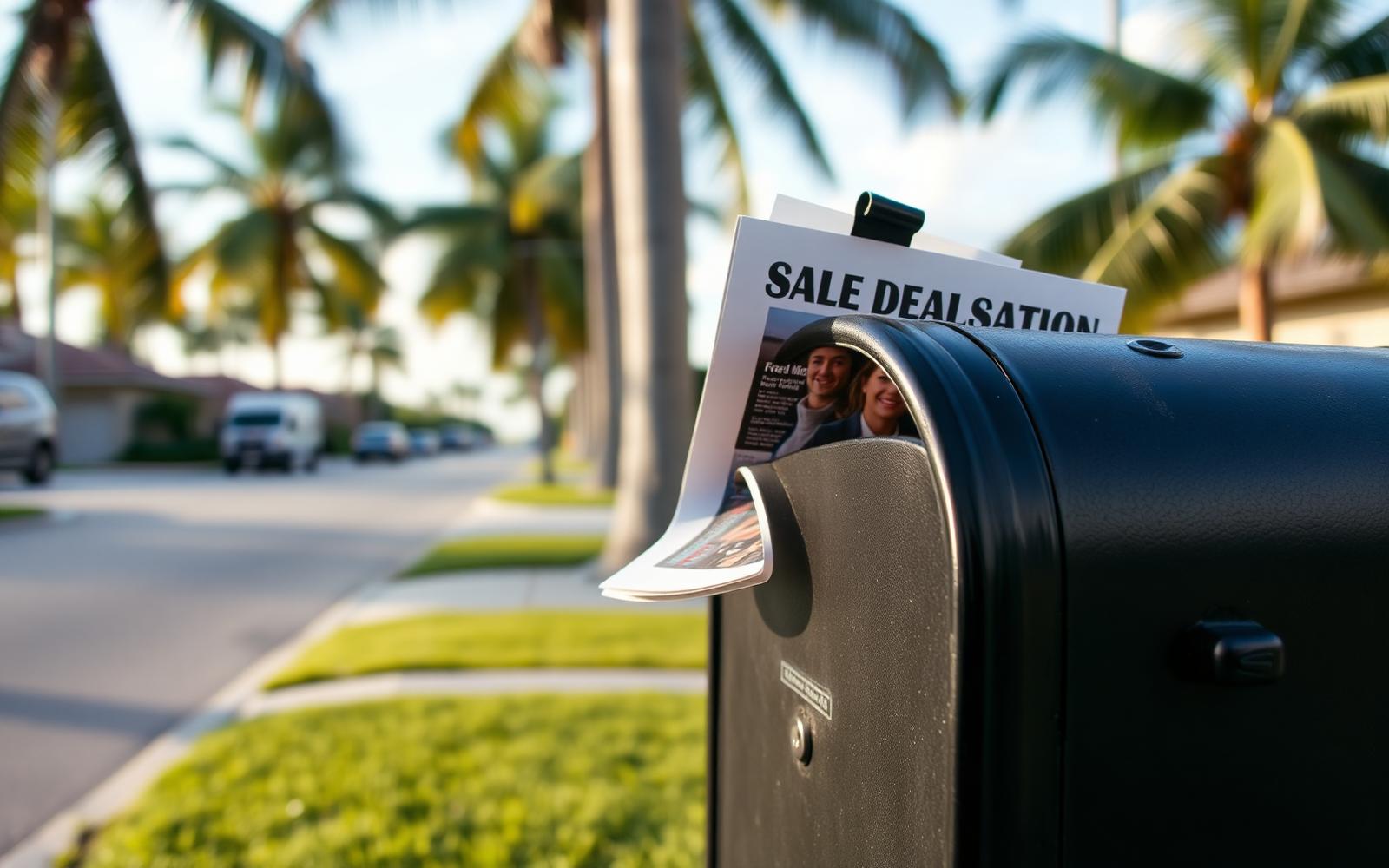
- Mail matches the geography of a driving city better than interest-based targeting.
Who this is for: Owners in Miami-Dade and Broward — including Kendall, West Kendall, Doral, Hialeah, Pembroke Pines and similar residential areas — who want repeat neighbors rather than one-time visitors.
National marketing advice assumes a market you can describe in one sentence. South Florida is not that. A business in West Kendall and a business on Lincoln Road are in the same county and in completely different economies: different languages at the counter, different peak months, different reasons people walk in the door.
Local advertising in South Florida means planning around three regional realities: a short driving radius, a genuinely bilingual population, and a seasonal split between residents and visitors. Ignore any one of them and the campaign underperforms for reasons the dashboard will not explain.
How attention works here
This is a driving region. People do not stroll past your window; they pass a plaza at 40 mph on a route they take every day. Familiarity, therefore, is built through repetition inside a narrow corridor, and discovery happens at home rather than on the sidewalk — at the kitchen counter, on a phone, in the ten minutes after the mail comes in.
Word of mouth is unusually strong here too. Families, church groups, gyms, and school communities move recommendations fast. An offer that is easy to describe and easy to forward travels further than its media buy.
Neighborhood radius thinking
Draw the radius your customers actually come from — usually much smaller than owners assume — and treat everything outside it as a nice accident. In practice this means concentrating spend inside a cluster of neighborhoods and repeating, rather than covering the county once.
| Area type | What it rewards | What it punishes |
|---|---|---|
| Residential suburb | Repetition, family offers, weeknight deals | Tourist-priced menus |
| Mixed commercial corridor | Visibility and convenience claims | Hard-to-reach parking, vague addresses |
| Tourist zone | Seasonal peaks, high-visibility signage | Dependence on a single season |
| Industrial / office | Lunch windows and weekday service | Weekend promotions |
The bilingual reality
In much of Miami-Dade, English-only advertising quietly excludes part of the households you paid to reach — and Spanish-only excludes another part. The practical answer is not to translate everything word for word; it is to make sure the offer, the limit, and the call to action are unambiguous in both languages.
- Keep the offer line short enough to work in both languages without reflowing the layout.
- Have a native speaker check it — machine translation of promotional copy reads as foreign.
- Make sure whoever answers the phone can serve both, or say plainly which language is available.
- Do not perform culture. Neighbors can tell the difference between speaking to them and marketing at them.
Seasonal rhythms: tourists versus residents
Two clocks run at once. The visitor clock peaks in the cooler months and around holidays. The resident clock is steadier, with its own patterns: back-to-school, summer heat driving A/C and indoor spending, and the hurricane-season stretch when households prepare and then hold spending.
Businesses built only on the visitor clock have brutal shoulder seasons. Residents are the base load. If your goal is a steadier year, the media has to reach households — which is the argument for direct mail into the routes around you.
A channel stack for South Florida owners
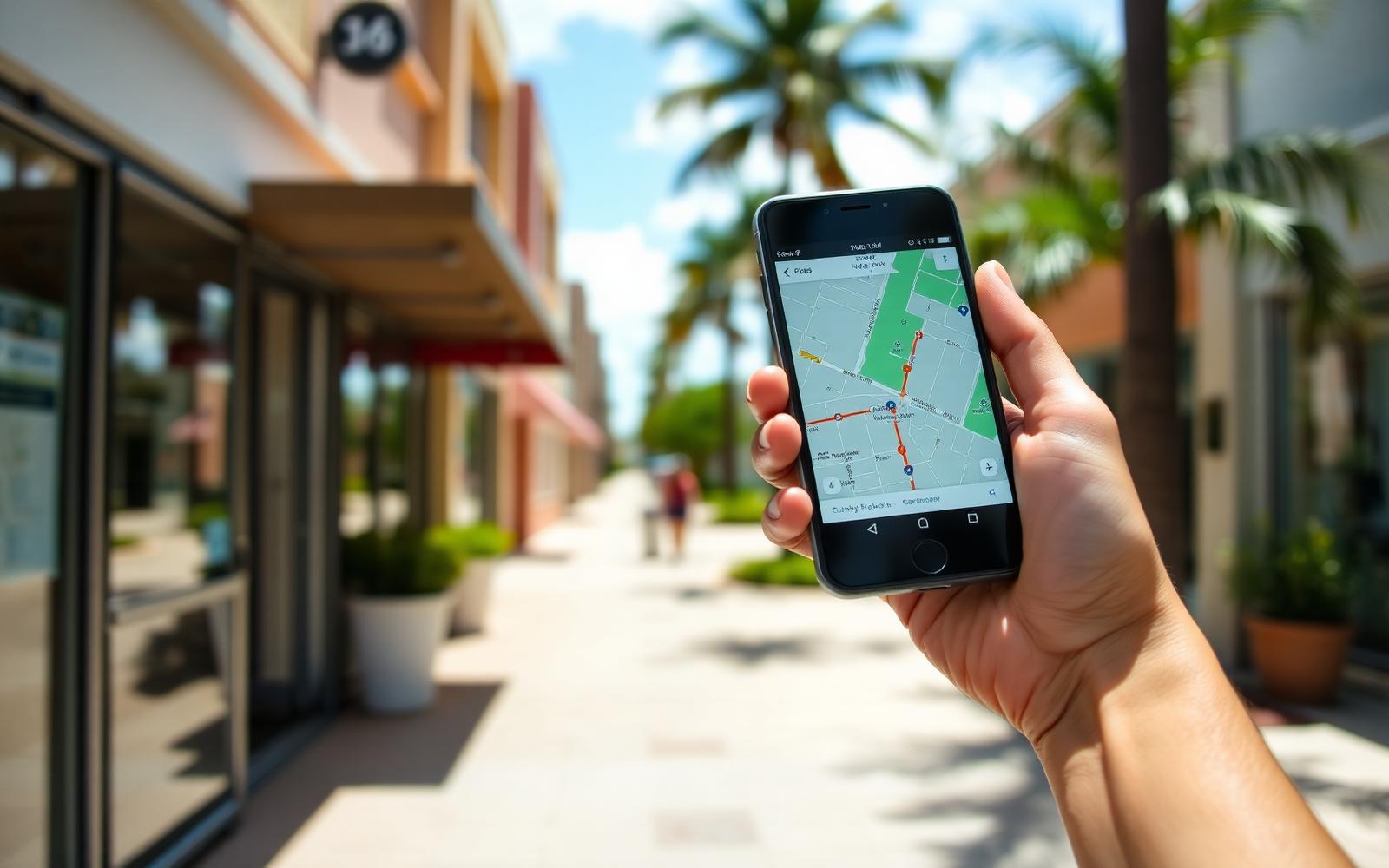
- Clean local listings first — hours, address, phone, and directions. Plaza addresses are confusing here; a wrong pin costs real visits. See Get Found Locally.
- Mail into your true radius, repeatedly, with one clear offer.
- Two scan paths on the printed page so both the curious and the ready have somewhere to go.
- A small social presence to stay familiar with the households the drop reached.
- Reviews in both languages, requested in person at the moment of satisfaction.
Common mistakes
- Treating “Miami” as one audience and buying reach across the whole county.
- Running a tourist-priced offer in a residential neighborhood.
- Ignoring the second language and assuming the response rate is a creative problem.
- Launching a big promotion in the deadest week of your own season.
- A map pin that drops behind a plaza instead of at the entrance.
- No plan for the second visit, in a market where repeat business is the whole game.
- Radius drawn from actual customer addresses, not from ambition.
- Offer readable and correct in both languages.
- Seasonal timing matches the resident clock, not just the visitor one.
- Map pin verified from a phone at the street entrance.
- Phone answered in the languages you advertise in.
- A defined reason for the customer to return within 60 days.
What to do Monday morning
Pull the ZIP codes of your last fifty customers and map them. That shape is your real market. Buy inside it, repeat inside it, and stop paying for anything outside it. When you are ready to reach those households directly, advertise with City Deals.
Frequently asked questions
How should a Miami small business advertise locally?
Start from the actual radius your customers drive, keep listings and map pins accurate, then buy repeated reach inside that radius — direct mail fits because it is sold by geography. Make the offer clear in both English and Spanish and give people a one-tap way to call or get directions.
Should South Florida ads be in English or Spanish?
Usually both, at least for the offer line, the limit, and the call to action. Have a native speaker review the copy, and make sure whoever answers the phone can serve the languages you advertise in.
When is the best time to advertise in South Florida?
It depends which clock you serve. Visitor-driven businesses peak in the cooler months; resident-driven businesses follow back-to-school, summer indoor spending, and post-storm-season recovery. Businesses that want stability advertise to residents year-round.
How large should a local advertising radius be here?
Smaller than most owners assume. Map your last fifty customers; the resulting shape is usually a cluster of adjacent neighborhoods, and concentrating repeated spend inside it beats covering the county once.
Put your business inside 10,000 local homes.
One printed page, two QR codes, and a digital offer neighbors can use today.
Advertise your business