How to Write a Local Coupon Offer People Actually Redeem
A practical playbook for writing local coupon offers that get redeemed: the anatomy of a strong offer, category templates for restaurants, dental, salons, HVAC and auto, plus a pre-print checklist.
- A redeemable offer names one thing, one price or saving, one limit, and one way to use it.
- Percentages are abstract; items and dollar amounts are concrete and get claimed more often.
- The limit is not a trick — it is what makes the neighbor act this week instead of never.
- One-time redemption protects margin while still allowing the offer to be shared.
- If your staff cannot explain the coupon in ten seconds, the coupon is wrong.
Who this is for: Local owners writing the offer that goes on a printed page and a digital coupon — especially first-time advertisers who default to a vague discount.
Every failed local coupon looks the same. “20% off — call today!” under a logo, next to a stock photo. It is not offensive, it is not confusing, and it does nothing, because it asks the reader to do all the work: figure out what they would buy, guess what it costs, imagine the saving, and decide when. A redeemable offer does that work for them.
A redeemable local offer is a single named item or service, at a stated price or saving, with a clear limit and a one-step way to claim it. Everything in this playbook comes back to those four elements. Get them right and redemption stops being a mystery.
Redeem versus “looks busy”
There are two kinds of offers. One is designed to be used; the other is designed to make the ad look active. The second kind is the reason owners conclude that coupons don't work. A coupon that nobody can picture using is decoration with a dollar sign on it.
Ask one question before printing: can a neighbor describe this offer to their spouse in a single sentence, correctly, from memory? If not, rewrite it. Local demand travels by conversation more than by click, and a sentence that survives being repeated is worth more than clever copy.
Anatomy of a strong local offer
- The thing: a specific item, package, or service — not a category.
- The number: a dollar amount, a fixed price, or a free add-on. Round numbers read faster.
- The limit: dates, quantity, first-visit only, one per household, or a day of the week.
- The proof of ease: what the neighbor shows at the counter and when.
- The boundary: what it does not include, in one short line, not a paragraph of legal text.
Category templates you can adapt
Restaurants
- “Free appetizer with two entrées, Sunday through Thursday.” Protects weekend margin, fills slow nights.
- “Family bundle: two large pizzas, salad, and soda for $34.” Names a total, removes menu math.
- “Lunch special $12 — 11 a.m. to 2 p.m., dine in.” Uses a time window instead of a discount.
Dental and clinics
- “New patient exam, cleaning, and X-rays — $89.” One package, one price, first visit only.
- “Free second-opinion consult, 20 minutes.” Low commitment, high conversion for expensive work.
Salons, barbers, medspas
- “$25 off your first color service with a named stylist.” Ties the offer to a person, which builds return visits.
- “Cut and beard trim, $35, Tuesdays and Wednesdays.” Fills the slowest chairs.
Home services and HVAC
- “$0 diagnostic fee waived with any completed repair.” Removes the barrier without discounting the work.
- “$79 seasonal tune-up, booked before the end of the month.” Seasonal urgency that is genuinely true.
Auto
- “Oil change $49 plus free 20-point inspection.” The inspection is the real product.
- “$100 off any brake job over $400.” Threshold discounts protect small tickets.
Vertical-specific strategy goes deeper in Restaurant Marketing That Fills Seats and Home Services Advertising That Gets the Phone to Ring.
One-time redemption: why it protects the business
An unbounded coupon is a permanent price cut with extra steps. The point of a promotional offer is to buy a first visit, not to retrain your neighborhood into never paying full price again. One-time redemption per person keeps the acquisition cost where it belongs — on acquisition.
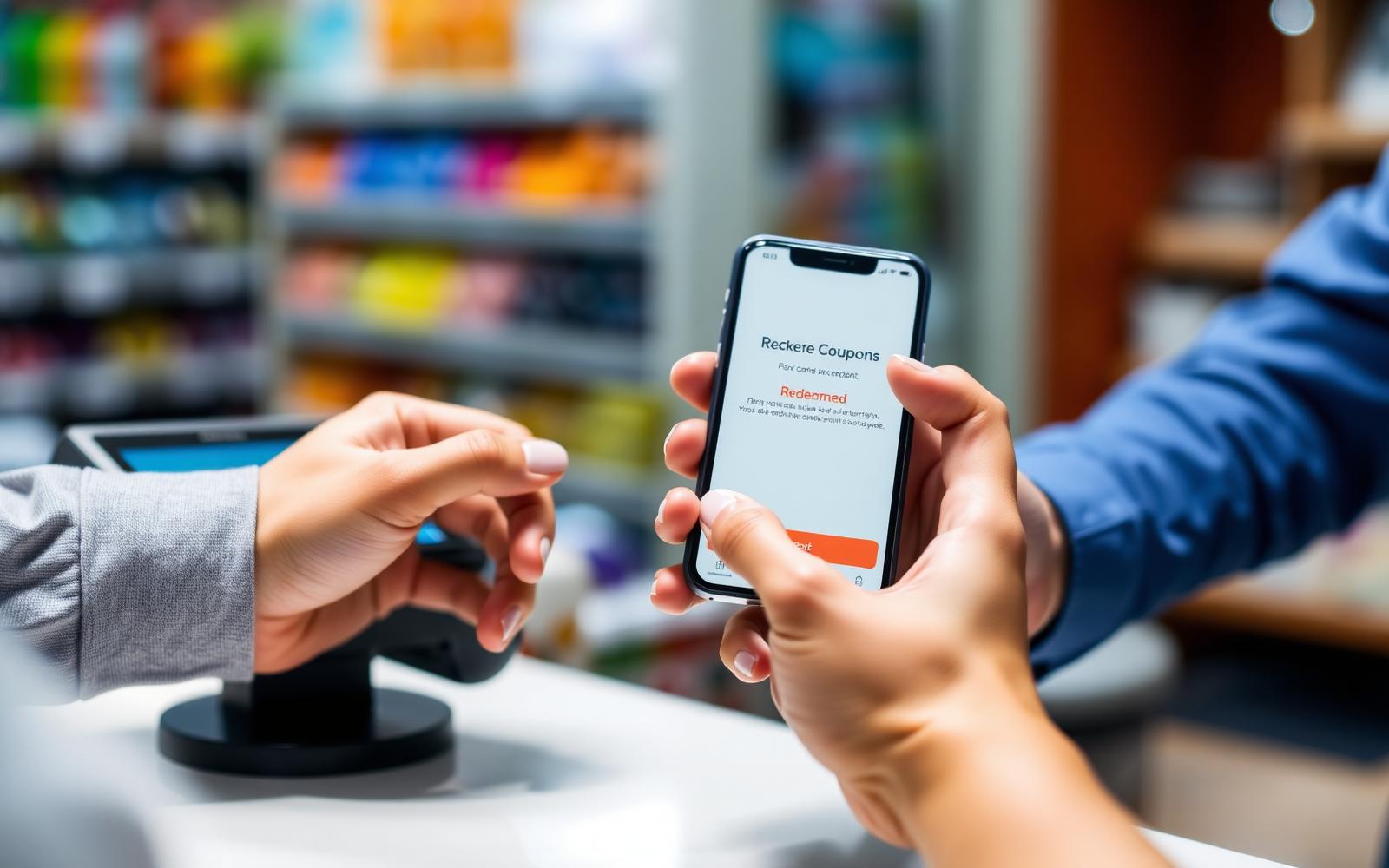
Digitally this is enforceable: the offer is claimed on the phone and marked redeemed at the counter, so the same code cannot be used twice. That mechanic is explained in Digital Coupons: Save, Share, and Redeem Once.
Save and share without abuse
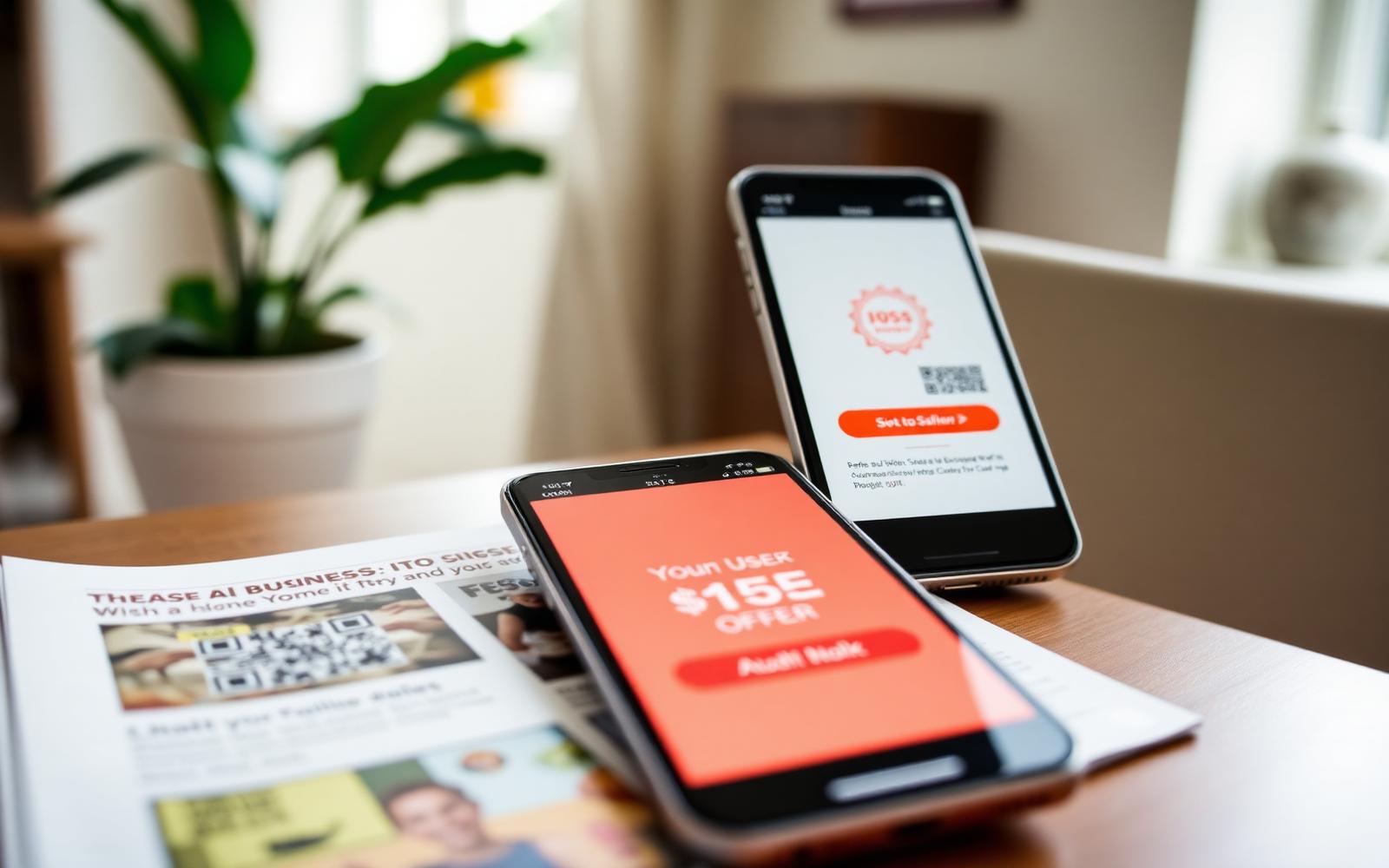
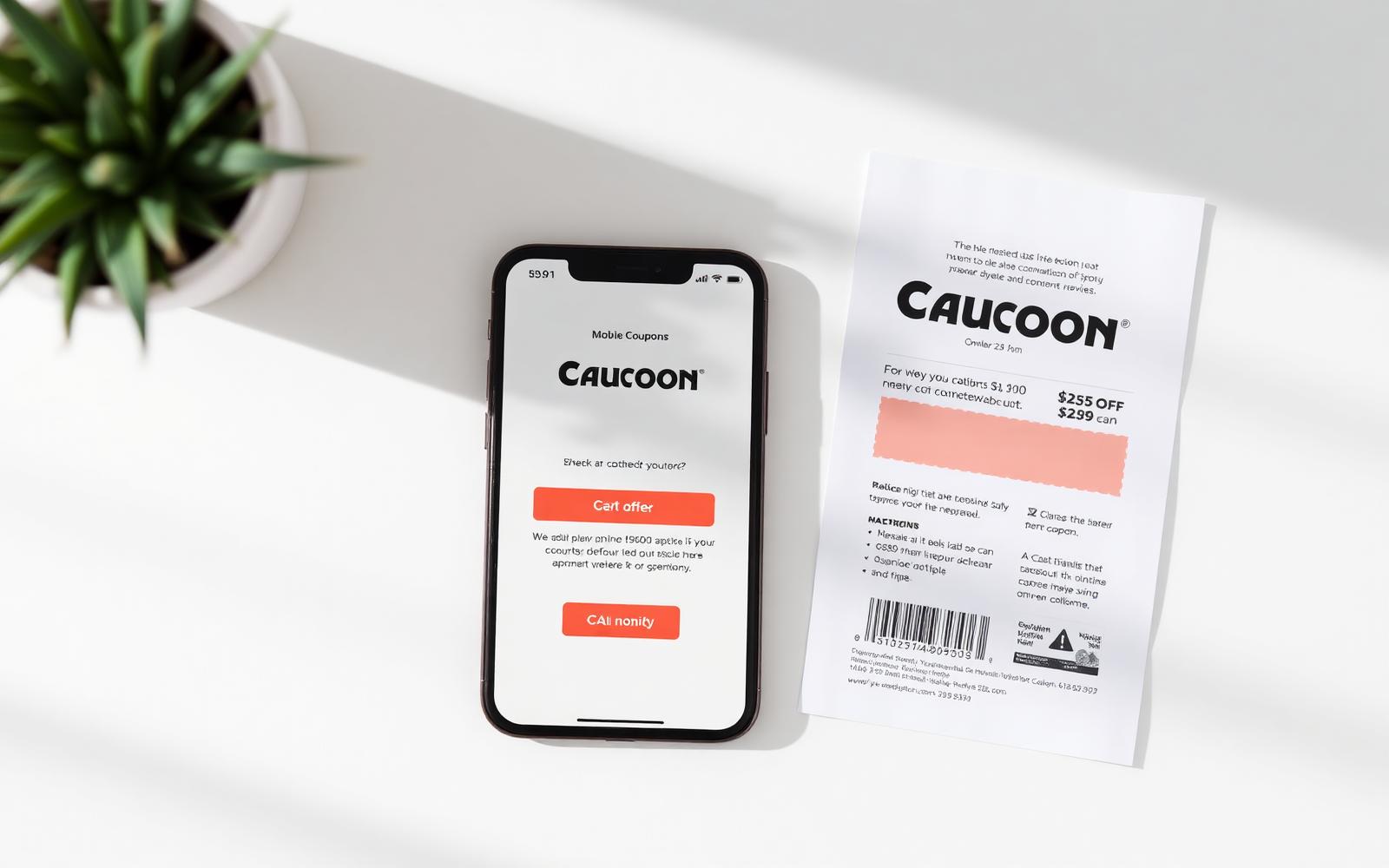
Sharing is not the enemy. A neighbor forwarding your offer is free distribution inside exactly the radius you paid to reach. The enemy is one person redeeming the same deal five times. Design for the first and block the second: allow the offer to travel, require a unique redemption per person, and keep the limits printed on both the page and the digital coupon so nobody feels tricked at the register.
What not to put on the coupon
- Three offers competing for one decision.
- “Up to” anything — it reads as a maximum nobody expects to get.
- Six lines of exclusions in 6pt type.
- A discount so deep that a full-price customer would feel foolish.
- An expiry so far away that there is no reason to move.
- Conditions your front-of-house staff have not been told about.
Margin math before you commit
| Check | Question to answer |
|---|---|
| Floor | What is the lowest ticket where this offer still contributes? |
| Capacity | Can you serve a busy week without slipping on quality? |
| Second visit | What brings this person back at full price? |
| Attach | What is the natural add-on that lifts the average ticket? |
| Ceiling | How many redemptions can you honor before it hurts? |
- The offer is one sentence a customer could repeat correctly.
- It names a thing and a number, not a percentage range.
- The limit is stated on the printed page and the digital coupon.
- Staff have seen the coupon and know the redemption rule.
- The math still works at the lowest realistic ticket.
- You know what you will offer these customers on their second visit.
What to do Monday morning
Pick the single product you would be glad to sell a hundred more of this month. Put a real number on it. Add one honest limit. Read it out loud to whoever works the counter, and if they ask a clarifying question, the offer is not finished. Then place it on a page with the two scan paths described in Two QR Codes on One Print Ad, or talk to us about advertising with City Deals.
Frequently asked questions
What makes a coupon offer actually get redeemed?
Specificity and a limit. Name one item or package, attach a dollar amount or fixed price, state a deadline or a one-per-household rule, and make claiming it a single step on the phone. Vague percentage discounts leave the reader to do the math and most will not.
Are percentage discounts or dollar amounts better?
Dollar amounts and fixed prices generally read faster because they remove mental arithmetic. Percentages can work on high-ticket services where the saving is obviously large, but avoid 'up to' phrasing entirely.
How deep should a first-visit discount be?
Deep enough to overcome inertia, shallow enough that the visit still contributes at your lowest realistic ticket. Prefer adding value — a free inspection, an included add-on — over cutting your core price.
Should coupons have an expiry date?
Yes. Without a deadline there is no reason to act this week, and undated offers resurface months later during your busiest season. A four-to-eight week window is usually enough.
How do I stop the same person redeeming repeatedly?
Use a digital coupon that is claimed on the phone and marked redeemed at the counter, plus a printed one-per-household line. Allow sharing so reach grows, but require a unique redemption per person.
Put your business inside 10,000 local homes.
One printed page, two QR codes, and a digital offer neighbors can use today.
Advertise your business