Restaurant Marketing That Fills Seats: Coupons, QR, and Repeat Visits
Restaurant marketing that fills tables: radius demand through direct mail, coupon types that respect food margin, QR paths for menu and offer, loyalty without spam, and a 30-day calendar.
- Most slow nights are a demand and return problem, not a kitchen problem.
- Restaurants live on a tight radius — mail matches that geography better than interest targeting.
- Protect margin with time-window and bundle offers instead of blanket percentage discounts.
- Separate the menu scan from the offer scan; they serve different moments.
- Loyalty works when it is rare and specific. Weekly blasts train people to ignore you.
Who this is for: Independent restaurant, pizzeria, café, and takeout owners in a residential radius who want steadier weeknights and more returning guests.
A half-empty Tuesday is rarely about the food. The food was fine last Saturday when the room was full. What changed is that on Tuesday nobody in the surrounding neighborhoods was reminded that you exist, and nobody had a reason to choose you over the pantry.
Restaurant marketing that fills seats does two things: it creates recurring attention inside the small radius your guests actually come from, and it gives a reason to return before the memory fades. Everything below serves one of those two jobs.
Why restaurants burn money on random promos
The usual pattern: a slow week triggers a panic discount, the discount brings deal-seekers who never return, margin takes the hit, and the owner concludes that promotions do not work. The problem was not the promotion. It was that it was reactive, unlimited, and aimed at nobody in particular.
A planned offer differs in three ways. It targets the shift you actually need to fill. It has a limit. And it is designed so that the second visit is worth more than the first — which is where restaurant profitability actually lives.
Mail for radius demand
Most independent restaurants draw the overwhelming majority of guests from a very short drive. That is a geographic fact, and geography is exactly what direct mail buys. A drop into the routes around you reaches households you would otherwise pay an auction to guess at.
It also lands in the room where the decision gets made. A magazine page with your dish on it sits on a counter for days; a boosted post is gone in a thumb swipe. The mechanics of the reach are in Direct Mail to 10,000 Homes.
Offer types that work for food — with margin caution
| Offer type | Best for | Margin risk |
|---|---|---|
| Free appetizer with two entrées | Filling weeknights | Low — tied to a full ticket |
| Family bundle at a fixed price | Takeout and delivery | Medium — control portions |
| Lunch price window | Dead midday hours | Low — incremental covers |
| Kids eat free on a set night | Neighborhood families | Low if limited to one child per adult |
| Percent off everything | Almost nothing | High — discounts your best sellers |
| Free dessert on a return visit | Driving the second visit | Very low, high impact |
Notice the pattern: the good offers add something or move demand into a slow window; the bad one cuts price across items that were already selling. Offer-writing rules in general are in How to Write a Local Coupon Offer People Actually Redeem.
QR to the menu moment vs the offer moment
A guest deciding where to eat wants to see food. A guest who has decided wants the deal and the directions. Those are different pages, and forcing both through one code loses one of them.
- Menu/commercial path: photos of real plates, the room, hours, and how far away you are.
- Offer path: the coupon, the limit, one tap to call, one tap for directions.
- Keep both pages fast on cellular — decisions happen in a car, not on office Wi-Fi.
The full reasoning for splitting the codes is in Two QR Codes on One Print Ad.
Loyalty, birthdays, and monthly offers without spam
Restaurant loyalty fails when it becomes noise. The guest who receives something every Thursday stops reading by the third week. Rarity is what makes an offer feel like a gift instead of a coupon book.
- One monthly offer, tied to the shift you most need to fill.
- A birthday offer that is generous and personal — this is the highest-response message a restaurant sends.
- A win-back for guests who have not visited in ninety days, sent once.
- Nothing else, unless something genuinely new is happening.
Operations: staff must know the redeem rule
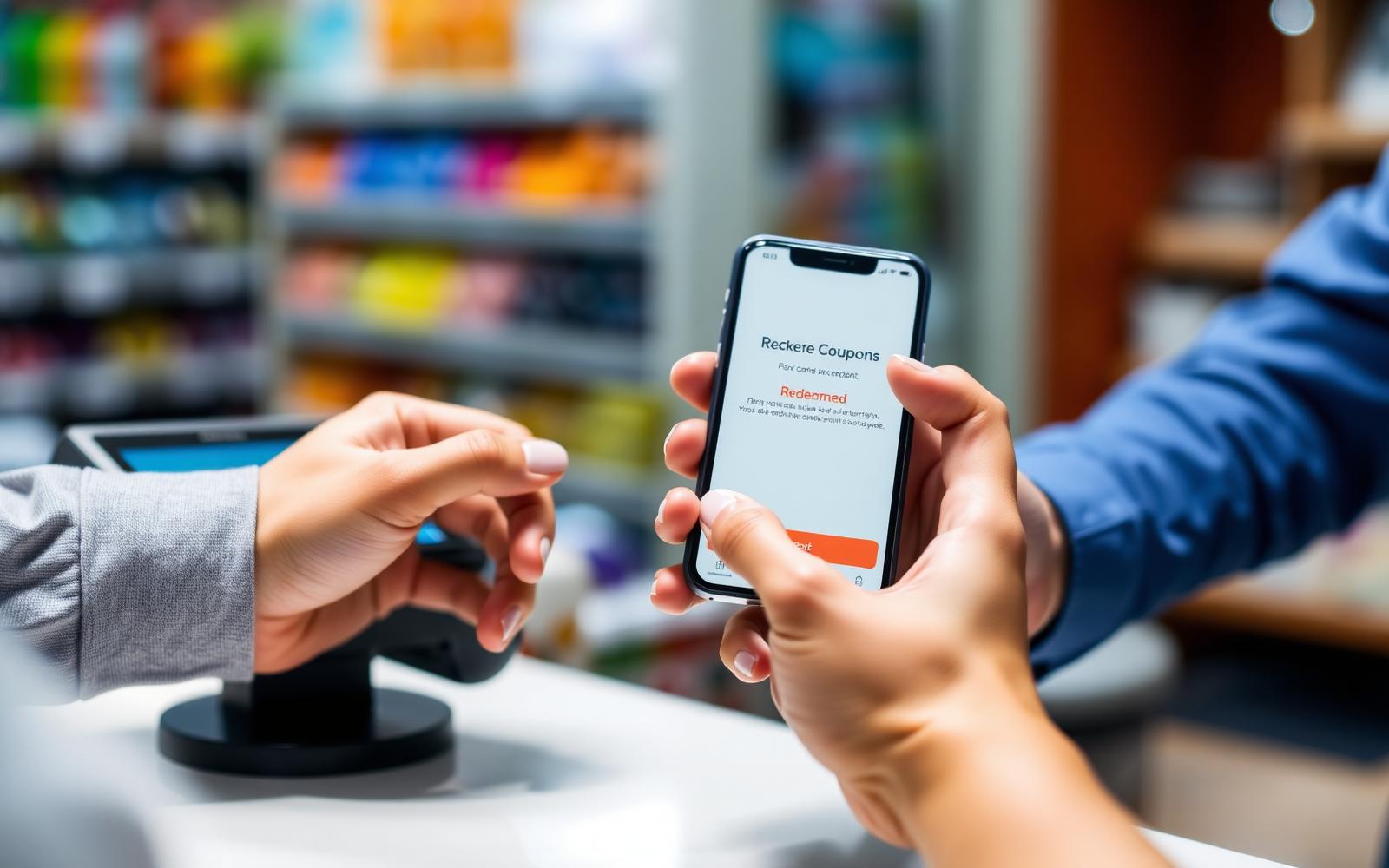
The most expensive point of failure is a server who has never seen the coupon. The guest arrives with a phone, the server hesitates, a manager gets called, and the experience you paid to create becomes awkward.
- What the digital coupon looks like on a phone.
- Exactly what it includes and excludes, in one sentence.
- How to mark it redeemed, and who does it.
- What to say if it has already been used: calm, no accusation, offer an alternative.
- One question to ask every new guest: how did you hear about us?
- Where to write the answer down.
A sample 30-day calendar
- Days 1–3: publication lands. Brief staff, print the one-pager, stock enough of the featured item.
- Days 4–10: peak response window. Track redemptions daily and note which shifts fill.
- Days 11–17: capture the second visit — hand a small return offer with the check.
- Days 18–24: review the numbers. Which shift moved? Which item attached?
- Days 25–30: decide the next offer based on the slowest shift, not the loudest opinion.
What to do Monday morning
Look at last month's covers by day and hour. Pick the worst shift. Design one offer that exists only to fill that shift, with a limit and an end date. Tell your staff before it runs, and give returning guests a reason to come back before they leave. If you want it in front of the households around you, advertise with City Deals.
Frequently asked questions
What kind of coupon works best for a restaurant?
Offers that add value or shift demand into a slow window — a free appetizer with two entrées, a fixed-price family bundle, or a lunch price window. Blanket percentage discounts are the weakest option because they cut price on items already selling at full margin.
How do restaurants get repeat customers?
Give the second visit a reason before the first one ends: a small return offer handed with the check, a birthday offer, and one monthly message tied to a slow shift. Frequency of contact should stay low so each message still feels like a gift.
Does direct mail work for restaurants?
It fits well because restaurant demand is tightly geographic. Mail buys the exact radius your guests drive from, and a printed page with real food photography stays visible in a kitchen for days.
Should the QR code go to the menu or the offer?
Both, on separate codes. Guests still deciding want food photos and distance; guests who have decided want the coupon, directions, and a call button. One code cannot serve both without losing one of them.
How do I stop discount-only customers from hurting margin?
Limit redemptions to one per person, tie the offer to a full ticket or a slow shift, and design an attach item that lifts the average check. Then measure the second visit, not the first.
Put your business inside 10,000 local homes.
One printed page, two QR codes, and a digital offer neighbors can use today.
Advertise your business